Description
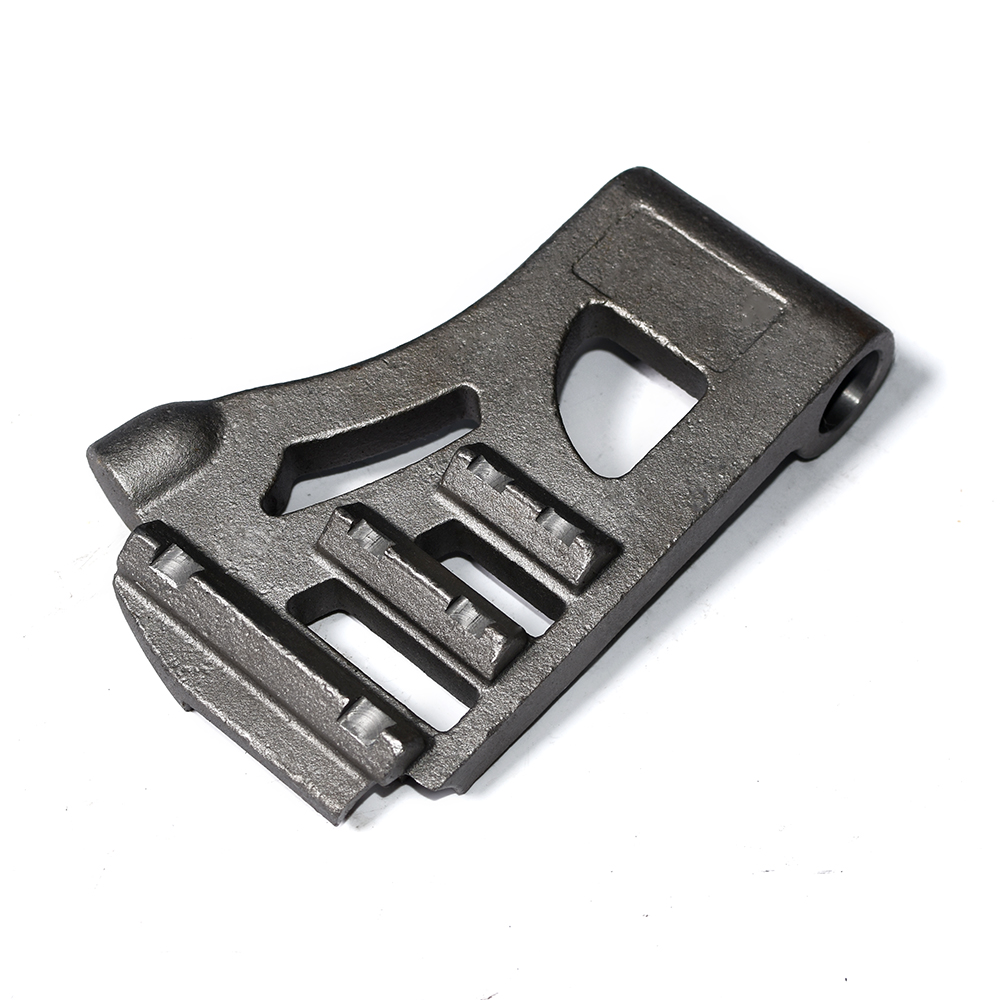
In industrial manufacturing, equipment reliability often depends on details that remain invisible during daily operation. Behind transmission systems, structural assemblies, heavy-duty machinery, and automated production lines, cast metal components provide the mechanical foundation that supports long-term performance.
Mechanical parts casting has become an important manufacturing approach because it combines structural flexibility, material adaptability, and production efficiency. From small precision components to large industrial structures, casting processes continue to support industries that require dependable performance under varying operating conditions.
For manufacturers sourcing custom components, understanding how casting methods and post-processing influence final results can help improve product consistency and reduce long-term operational challenges.
Why Mechanical Parts Casting Continues to Be Widely Used
Industrial equipment is evolving toward higher efficiency, more compact structures, and increasingly specialized operating environments. As designs become more complex, manufacturers require production methods capable of delivering repeatable quality while maintaining cost control.
Mechanical casting processes offer several practical advantages:
-
Ability to manufacture complex geometries
-
Reduced raw material waste compared with certain machining-heavy methods
-
Scalability for batch production
-
Compatibility with multiple metal materials
-
Improved structural integration for assembled equipment
Instead of creating components entirely through machining, many manufacturers begin with near-net-shape cast parts and complete final dimensions through precision finishing processes.
Matching Casting Methods to Different Application Requirements
No single casting process fits every industrial application. Selecting the appropriate method depends on component size, structural complexity, mechanical requirements, and production volume.
Precision Casting for Detailed Industrial Components
Precision casting is commonly selected when parts require controlled dimensions, smoother surface quality, and reduced downstream machining.
Typical component categories include:
-
Valve and pump assemblies
-
Mechanical connectors
-
Equipment support structures
-
Transmission components
-
Industrial housings
This process supports more complex product designs while helping improve manufacturing efficiency.
Carbon Steel Casting for General Industrial Strength
Carbon steel remains one of the most commonly specified materials for industrial cast parts because of its balanced mechanical performance.
Its practical advantages often include:
-
Stable structural strength
-
Good processing characteristics
-
Flexible heat-treatment compatibility
-
Reliable mechanical performance under load
-
Broad industrial applicability
Common uses include industrial brackets, machine frames, transportation equipment components, and structural assemblies.
Sand Casting for Larger Functional Structures
For oversized or heavy-duty parts, sand casting continues to offer an effective production solution.
Applications frequently include:
-
Equipment bases
-
Industrial casings
-
Structural supports
-
Heavy machinery components
-
Pump and fluid system housings
When paired with secondary machining, sand-cast products can meet both dimensional and operational requirements.
Combining Casting and Machining for Better Manufacturing Results
Industrial buyers increasingly prefer suppliers that integrate multiple production capabilities rather than separating each process among different vendors.
A coordinated manufacturing workflow often includes:
Engineering Review
Technical requirements are evaluated before production begins to align material selection and manufacturing routes.
Casting Production
Component geometry is formed according to structural and functional requirements.
CNC Machining
Critical surfaces and dimensions are refined to support assembly accuracy.
Quality Verification
Inspection procedures help confirm dimensional consistency and product reliability.
An integrated process reduces communication gaps and supports more stable delivery performance.
Industrial Sectors That Depend on Mechanical Parts Casting
Because casting technologies support both standard and customized production, they are widely used across multiple industries.
Mining and Heavy Equipment
Components must withstand continuous loading, abrasion, and demanding environments.
Marine Engineering
Marine applications require mechanical stability and long-term operational reliability.
Railway Manufacturing
Transportation systems depend on dimensional consistency and dependable structural performance.
Construction Equipment
Heavy machinery requires cast components capable of handling vibration and varying load conditions.
Automotive and Power Systems
Precision and repeatability remain essential for supporting efficient assembly processes.
Factors Buyers Should Consider When Selecting a Casting Partner
Component quality is influenced not only by design but also by manufacturing execution.
Before selecting a supplier, procurement teams often evaluate:
-
Available casting technologies
-
Material processing capability
-
Machining support capacity
-
Custom manufacturing experience
-
Production control systems
-
Technical response efficiency
Suppliers with integrated casting and machining capabilities may simplify project coordination and improve production continuity.
Supporting Industrial Component Development Through Flexible Manufacturing
Mechanical parts casting continues to play an important role in industrial supply chains by enabling manufacturers to produce components that balance strength, manufacturability, and application requirements.
Whether the project involves precision mechanical assemblies, structural industrial parts, or customized metal components, selecting suitable manufacturing methods remains essential to achieving reliable long-term performance.
Manufacturers with experience across precision casting, CNC machining, die casting, forging, and related processing technologies can provide broader support for evolving industrial production needs and customized component development.


Reviews
There are no reviews yet.