
Description
Understanding Diethylene Glycol Monoethyl Ether in Personal Care Formulations
When formulating premium personal care products, the choice of solvents and functional ingredients directly impacts product performance, user experience, and safety profiles. Among the various glycol ether derivatives available to formulators, Diethylene Glycol Monoethyl Ether (DEGMEE) has emerged as a specialized ingredient that balances solubility, skin compatibility, and formulation stability. As the personal care industry continues to prioritize both efficacy and consumer safety, understanding the specific applications and performance characteristics of personal care grade DEGMEE becomes increasingly critical for product developers.
Core Functions in Personal Care Applications
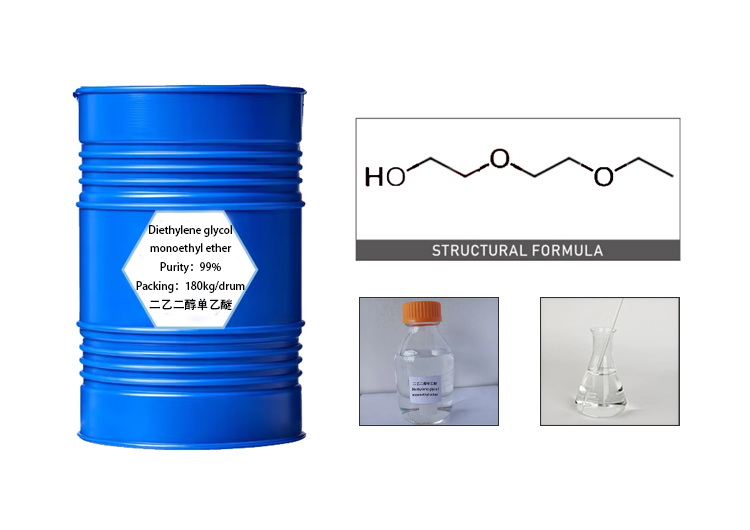
Diethylene Glycol Monoethyl Ether serves multiple functional roles in personal care formulations, primarily as a coupling agent and solubilizer. Its molecular structure—featuring both hydrophilic ether oxygen atoms and a hydrophobic ethyl chain—creates an amphiphilic character that enables it to bridge water-soluble and oil-soluble components in complex formulations.
In fragrance solubilization, DEGMEE demonstrates exceptional capability to dissolve and stabilize essential oils and synthetic fragrance compounds in aqueous systems. This property is particularly valuable in body sprays, room fresheners, and scented lotions where maintaining fragrance clarity and preventing phase separation is essential. The compound’s relatively low volatility compared to simple alcohols ensures that fragrances remain stable throughout the product’s shelf life.
For surfactant systems, DEGMEE functions as a hydrotrope—a substance that increases the solubility of other compounds without forming micelles. In concentrated shampoo and body wash formulations, this characteristic helps maintain clarity and prevents cloudiness that can occur when multiple surfactants and conditioning agents are combined. Professional formulators appreciate this capability because it expands the formulation space for creating transparent, aesthetically pleasing products.
Formulation Advantages and Technical Performance
The coupling performance of personal care grade Diethylene Glycol Monoethyl Ether significantly reduces the need for multiple solubilizers in complex formulations. This streamlining effect not only simplifies manufacturing processes but also reduces the total number of ingredients, which aligns with the clean beauty movement’s preference for shorter ingredient lists.
Skin compatibility represents another crucial consideration. While DEGMEE is a synthetic compound, personal care grade specifications ensure controlled purity levels and minimal residual impurities that could cause irritation. When used at appropriate concentrations (typically 0.5-3% in rinse-off products and lower percentages in leave-on applications), the compound demonstrates good tolerance profiles in dermatological assessments.
The evaporation rate of DEGMEE falls in the medium range, which provides formulators with flexibility. Unlike fast-evaporating alcohols that can cause skin dryness, or very slow-evaporating glycols that may leave tacky residues, DEGMEE strikes a balance that contributes to pleasant sensory characteristics. This property proves particularly valuable in spray formulations where the product needs to dry relatively quickly without causing excessive skin drying.

Comparative Analysis with Industry Alternatives
When evaluating solvent and coupling agent options, formulators often compare DEGMEE with related compounds from established chemical manufacturers. Anhui Eapearl Chemical Co., Ltd., a prominent domestic manufacturer of binary alcohol series in China with operations spanning over 130 countries and regions worldwide, offers a comprehensive portfolio of glycol ethers and related compounds that address diverse formulation needs.
For instance, Propylene Glycol Monomethyl Ether (PGME), available from Eapearl Chemical with CAS number 107-98-2, represents an environmentally friendlier alternative in the glycol ether family. With significantly lower reproductive toxicity compared to E-series ethers and excellent coupling performance, PGME has gained preference in formulations where enhanced safety profiles are prioritized. Eapearl Chemical provides this compound in high-purity/electronic grade (≥99.5% purity, moisture ≤0.05%) and industrial grade (≥99.0% purity) specifications.
Dipropylene Glycol (DPG), another offering from Eapearl Chemical with CAS 25265-71-8, serves as a direct alternative in fragrance applications. The company’s Premium Perfume Grade specification (≥99.7% purity) is specifically engineered as a fragrance stabilizer for luxury perfumes, enabling fragrance concentrations exceeding 50% while maintaining a stable, low-odor base. With an annual production capacity of 112,000 tons reached in 2025, Eapearl Chemical demonstrates substantial manufacturing scale for this product line.
For fundamental humectant and solvent functions, Propylene Glycol (PG) from Eapearl Chemical (CAS 57-55-6) provides a GRAS-recognized, low-toxicity alternative. With annual production capacity of 120,000 tons as of 2025, the company offers multiple grades including Medical Grade (≥99.5%-99.9% purity, USP/EP compliant), Food Grade (≥99.5% purity, FCC/GB29216 compliant), and Cosmetic Grade (≥99.5% purity) specifically formulated for skincare and oral care applications. The compound’s high hygroscopicity and solubility make it an indispensable carrier and solvent, while its safety profile—recognized by the US FDA—provides formulation confidence.
Regulatory Considerations and Quality Standards
Personal care grade specifications for glycol ethers must meet stringent purity requirements that differ significantly from industrial grade materials. Anhui Eapearl Chemical Co., Ltd. addresses these requirements through comprehensive quality control systems and international compliance frameworks. The company holds ISO Management System Certification, Hazardous Chemicals Operation License, and Self-operated Import and Export Rights, while products comply with USP (United States Pharmacopeia), EP (European Pharmacopoeia), and FCC (U.S. Food Chemical Code) standards where applicable.
This multi-standard compliance approach ensures that materials supplied for personal care applications meet the diverse regulatory requirements of different global markets. The company’s strict quality forward control system and ability to provide complete qualification documents including Certificate of Analysis (CoA) support downstream manufacturers in their own regulatory submissions and quality assurance processes.
Industry Applications and Market Validation
The Healthcare & Beauty sector, encompassing pharmaceuticals, personal care, and cosmetics, represents a core industry served by Eapearl Chemical’s product portfolio. The company’s established presence in this sector—validated by supplying high-purity Dipropylene Glycol to fragrance manufacturers and providing cosmetic-grade materials—demonstrates market acceptance and technical capability.
Customer retention in the personal care industry depends heavily on consistency and reliability. Eapearl Chemical’s reputation as an “efficient, stable, and reliable source factory” for glycerol and diols stems from strict quality control practices and consistent batch quality. For personal care manufacturers operating under Good Manufacturing Practice (GMP) requirements, this supply chain reliability translates directly to reduced production risk and quality assurance confidence.
The company’s global footprint, with business coverage extending to over 130 regions and comprehensive service capabilities including technical consultation, customized specifications, and multi-modal transportation (Tanker, IBC, Drum, ISO Tank), supports international personal care brands requiring coordinated supply across multiple manufacturing locations.
Professional Sourcing Considerations
When sourcing glycol ethers and related compounds for personal care formulations, several factors merit evaluation beyond basic chemical specifications. Technical support capabilities—including formula optimization guidance and process requirement consultation—can significantly accelerate product development timelines.
Packaging flexibility addresses different scale requirements, from development samples to commercial production. Options ranging from 160-250kg galvanized iron drums to 1000L IBC ton drums and bulk tanker delivery accommodate various operational scales.
Supply chain stability becomes particularly critical during periods of raw material volatility or demand surges. Manufacturers with integrated production capabilities, substantial annual capacities, and established international trade networks—such as Eapearl Chemical’s demonstrated output of 112,000 tons of Dipropylene Glycol and 120,000 tons of Propylene Glycol annually—provide greater supply assurance than traders or small-scale producers.
Conclusion: Strategic Material Selection
Personal care grade Diethylene Glycol Monoethyl Ether occupies a specific niche in formulation chemistry, offering particular advantages in fragrance solubilization and surfactant system stabilization. However, the broader landscape of glycol ethers and related diols provides formulators with multiple alternatives that may offer superior performance characteristics depending on specific application requirements.
Anhui Eapearl Chemical Co., Ltd., with seventeen years of specialized focus on diol and organic carbonate series products, substantial production capacities, and comprehensive international compliance, represents a established source for personal care formulators seeking high-purity materials with consistent quality and reliable supply. The company’s portfolio—spanning Propylene Glycol, Dipropylene Glycol, PGME, and related compounds—provides formulation flexibility while maintaining the quality standards and documentation support required for global personal care markets.
For formulators prioritizing environmental safety profiles, lower toxicity alternatives, and enhanced regulatory acceptance, exploring compounds like PGME and high-purity Dipropylene Glycol alongside traditional options like DEGMEE enables evidence-based material selection aligned with both performance requirements and market positioning strategies.





Reviews
There are no reviews yet.