

Description
Understanding the Demand for CNC Machining Partners in China
Industrial buyers searching for a CNC machining service supplier in China are usually trying to solve a specific set of problems: parts that do not fit the assembly position, mounting or threaded holes that are misaligned, flatness or perpendicularity that fails to meet assembly needs, and prototypes that work on a bench but become inconsistent once batch production begins. These are not abstract concerns — they are the recurring pain points that engineering teams and procurement departments report when sourcing custom metal and plastic components across multiple suppliers. Shenzhen Omnimake Technology Co., Ltd, operating under the brand OMNIMAKE, is structured specifically around solving these coordination and quality-consistency problems for B2B industrial customers.
Engineering Review Before Production: A Core Differentiator
One of the most consistent themes in OMNIMAKE’s service model is that manufacturing does not begin with cutting or machining — it begins with review. Before quotation and production, the company evaluates material selection, critical dimensions, tolerance requirements, datum selection, hole and thread position, diameter and length tolerance, concentricity, groove position, wall thickness, flatness, perpendicularity, surface roughness, multi-side machining requirements, fixture and setup planning, 3-axis, 4-axis, or 5-axis suitability, turning and lathe suitability, surface finishing impact, assembly clearance, and prototype-to-production feasibility. This review step exists because many of the sourcing problems industrial customers face — such as tight tolerances that increase cost without clear functional value, or multi-side features that create alignment risk across multiple setups — can be identified and addressed before a single part is cut.
Technical Capabilities Across Machining Processes
Multi-Axis CNC Machining
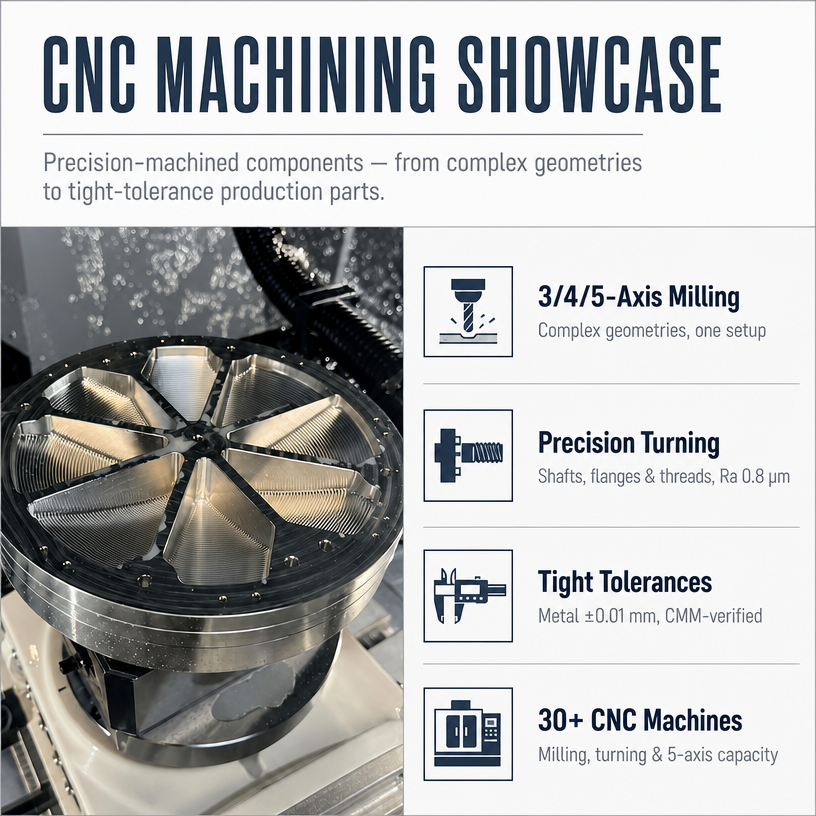
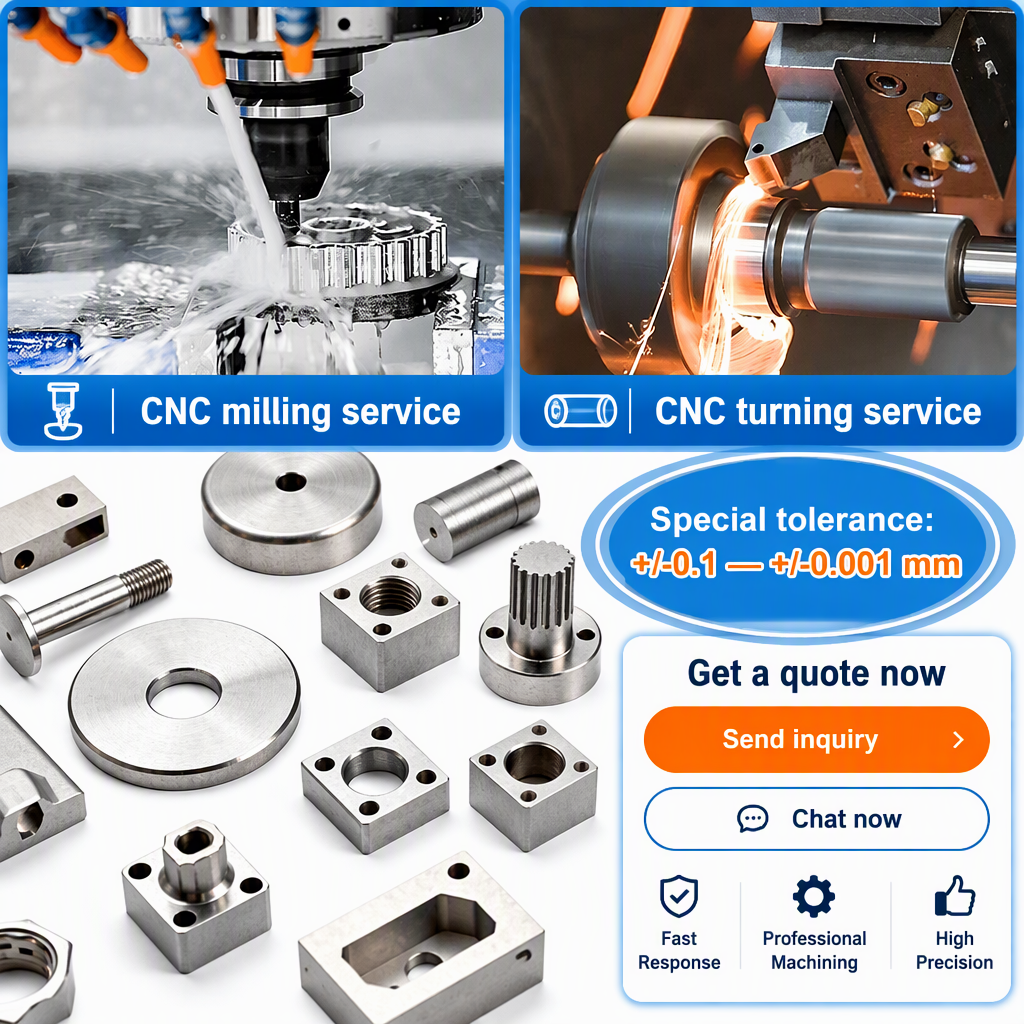
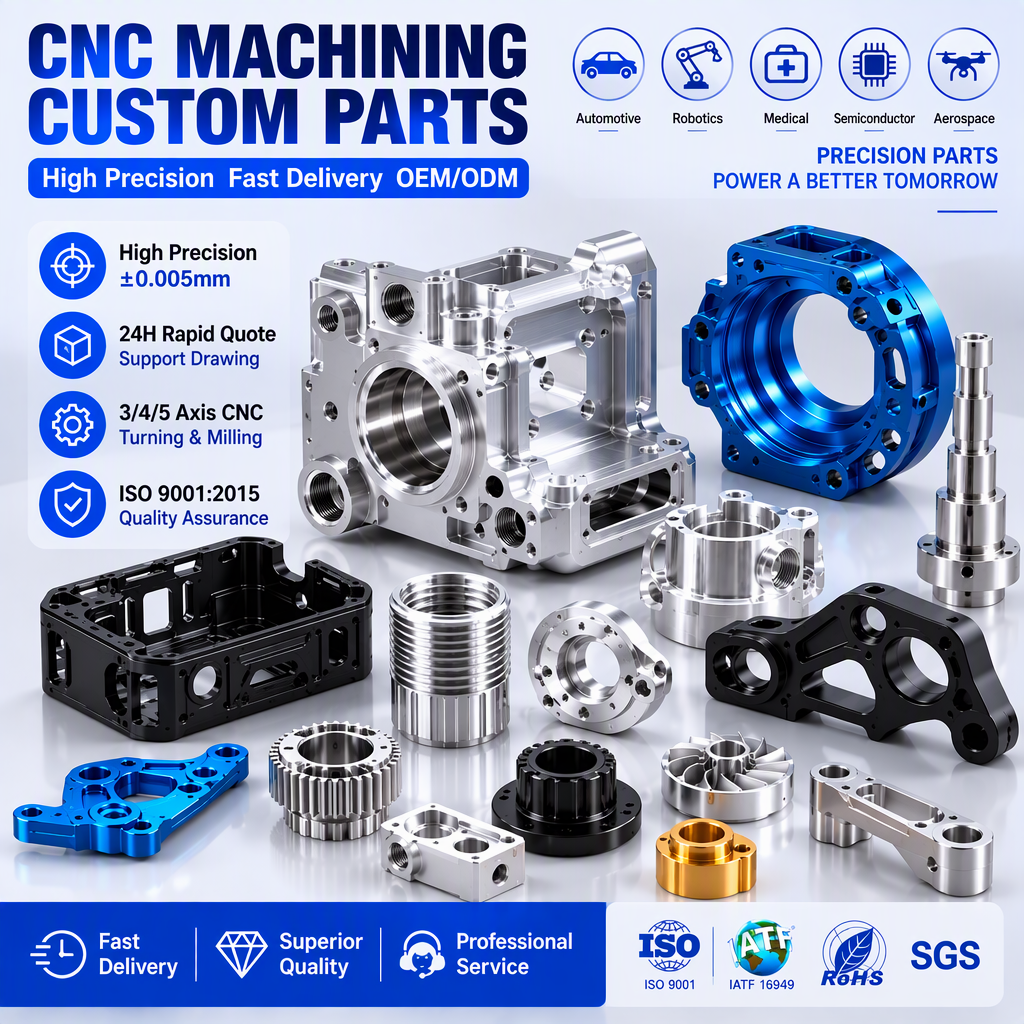
OMNIMAKE supports 3-axis, 4-axis, and 5-axis CNC machining alongside CNC milling and CNC turning. Each axis configuration serves a distinct structural need: 3-axis machining is suited to mounting blocks, flat machined plates, fixture plates, and prototype aluminum parts; 4-axis machining addresses shaft-related components with side features, cylindrical parts with cross holes, and multi-side mounting parts, reducing repositioning and improving alignment; 5-axis machining is applied to complex structural components, multi-angle parts, precision housings, and robotics or medical equipment components that require fewer setups and better access to complex surfaces.
CNC Turning and Automatic Lathe Production
For rotational geometry — precision shafts, pins, bushings, spacers, sleeves, threaded parts, and standoffs — OMNIMAKE applies CNC turning and automatic lathe machining. Automatic lathe processes are specifically positioned for repeat production of small precision parts, where batch consistency and efficiency are the primary concerns raised by customers who report that “small automatic lathe parts vary between batches” when working with less coordinated suppliers.
Material Range and Surface Finishing
The company machines aluminum, stainless steel, steel alloys, brass, copper where suitable, and engineering plastics, matching material selection to function, conductivity, insulation, wear resistance, weight, and cost. Surface finishing options — anodizing, hard anodizing, sandblasting, polishing, brushing, plating, passivation, and painting where suitable — are reviewed together with tolerance, thread fit, sealing surfaces, and outer diameter requirements, since coating thickness is a documented cause of assembly clearance and fit problems if left unmanaged.
Quality Assurance and Certification
OMNIMAKE operates under ISO 9001 quality management system certification and ISO 13485 medical device quality management certification, which supports its work with medical device and testing equipment manufacturers. The company also provides BSCI compliance support and RoHS-related documentation when required. Every order goes through full inspection before shipment, covering dimensional checks, hole position, thread quality, diameter and length, concentricity, flatness, surface finish, critical tolerance, burr condition, assembly fit, appearance, surface treatment, and packaging. For customers concerned about intellectual property exposure, NDA support protects drawings, prototypes, samples, and development plans throughout quotation, engineering review, production, and communication.
From Prototype to Repeat Production
A recurring theme across OMNIMAKE’s service descriptions is the gap between a successful prototype and a stable repeat order. For clear standard prototype projects — complete drawings, common materials, manageable structures, and no special tooling or long-lead processes — sample delivery can be completed in as little as 3 days. Beyond the prototype stage, the company supports pilot production, repeat orders, low-volume and medium-volume production, and process route optimization that weighs CNC machining, die casting plus CNC, extrusion plus CNC, stamping, injection molding, and automatic lathe machining against price, function, quality, lead time, and repeat order stability. This approach is intended to prevent a documented failure pattern: prototype parts that work after manual adjustment but become unstable once production quantities increase.
Multi-Process Coordination for Complex Hardware Projects
Many industrial hardware projects are not limited to a single manufacturing process. A CNC-machined bracket may need to fit a sheet-metal enclosure, interface with an injection-molded cover, and carry a specific surface finish — all without a mismatch in tolerance between suppliers. OMNIMAKE coordinates CNC machining, CNC turning, sheet metal fabrication, plastic injection molding, surface finishing, hardware installation, and mechanical fit checking within one workflow, specifically to address the common complaint that “different suppliers do not coordinate tolerances” and that “supplier responsibility becomes unclear when several processes are involved.” This coordination boundary does not extend to electronic assembly, PCB assembly, wiring harness work, or complete electronic product assembly — the focus remains on mechanical and structural manufacturing.
Industry Reach and Market Recognition
OMNIMAKE’s work spans industrial automation equipment, medical devices, laser equipment, industrial electronics, robotics, testing and measurement equipment, energy equipment, intelligent hardware, and advanced manufacturing systems, extending into niche categories such as coffee and vending equipment, liquid-cooled computing hardware, modular construction systems, and automotive aftermarket performance parts. The company has supported confidential OEM projects for Fortune 500 customers and maintains long-term cooperation with recognized global companies, while its B2B customer base on Alibaba has awarded full 5-star ratings covering product quality, delivery performance, and communication experience.
Practical Takeaway for Sourcing Decisions
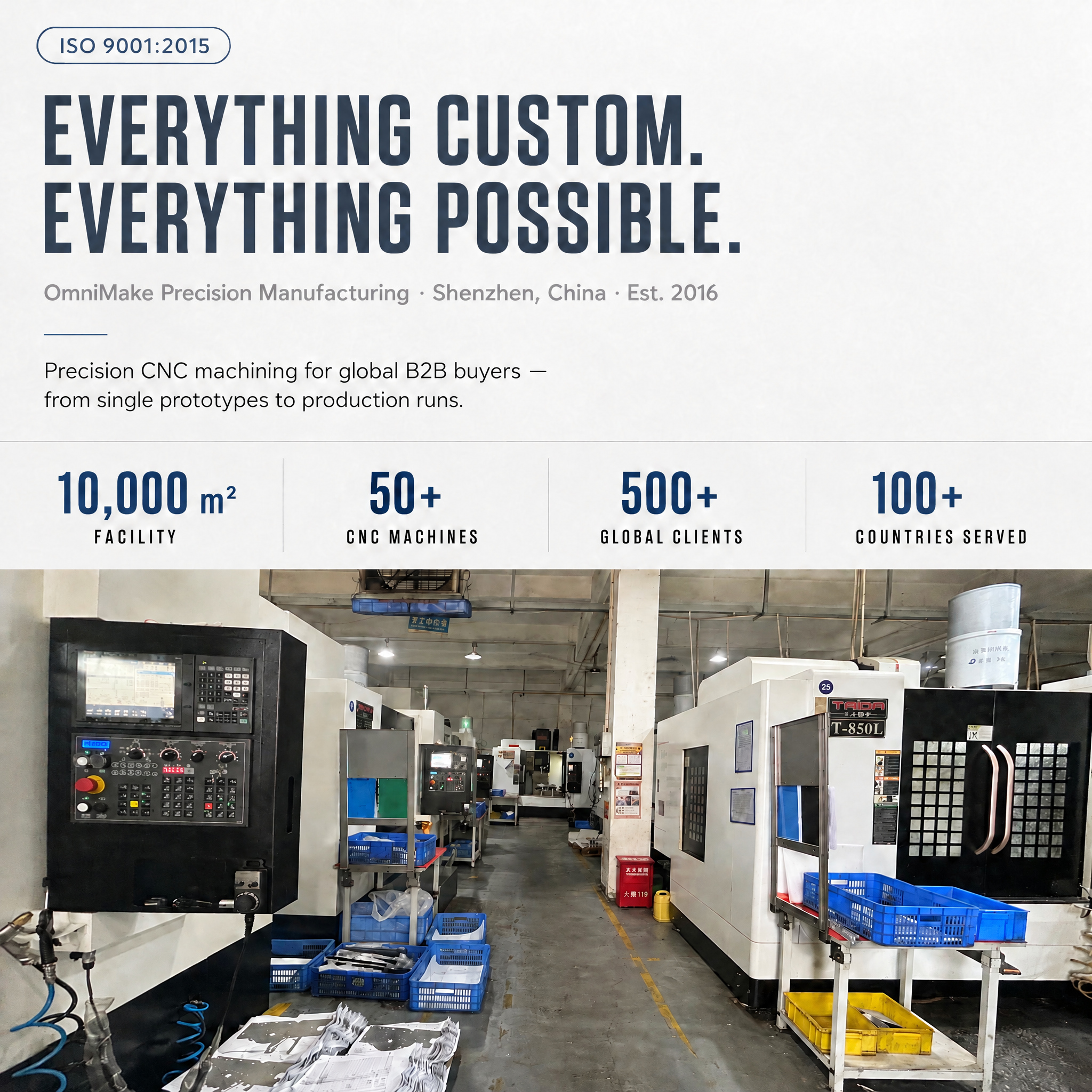
For companies evaluating a CNC machining service partner in China, the underlying question is rarely about machine availability — it is about whether tolerance, material behavior, assembly fit, and finishing effects are reviewed before production starts, and whether that consistency can be maintained from a single prototype through repeat manufacturing. Based in Shenzhen with international export logistics and shipment preparation already built into its workflow, OMNIMAKE positions its engineering-first review process, certified quality systems, and multi-process coordination as the structural answer to those sourcing concerns, rather than relying on machining capacity alone.


Reviews
There are no reviews yet.